
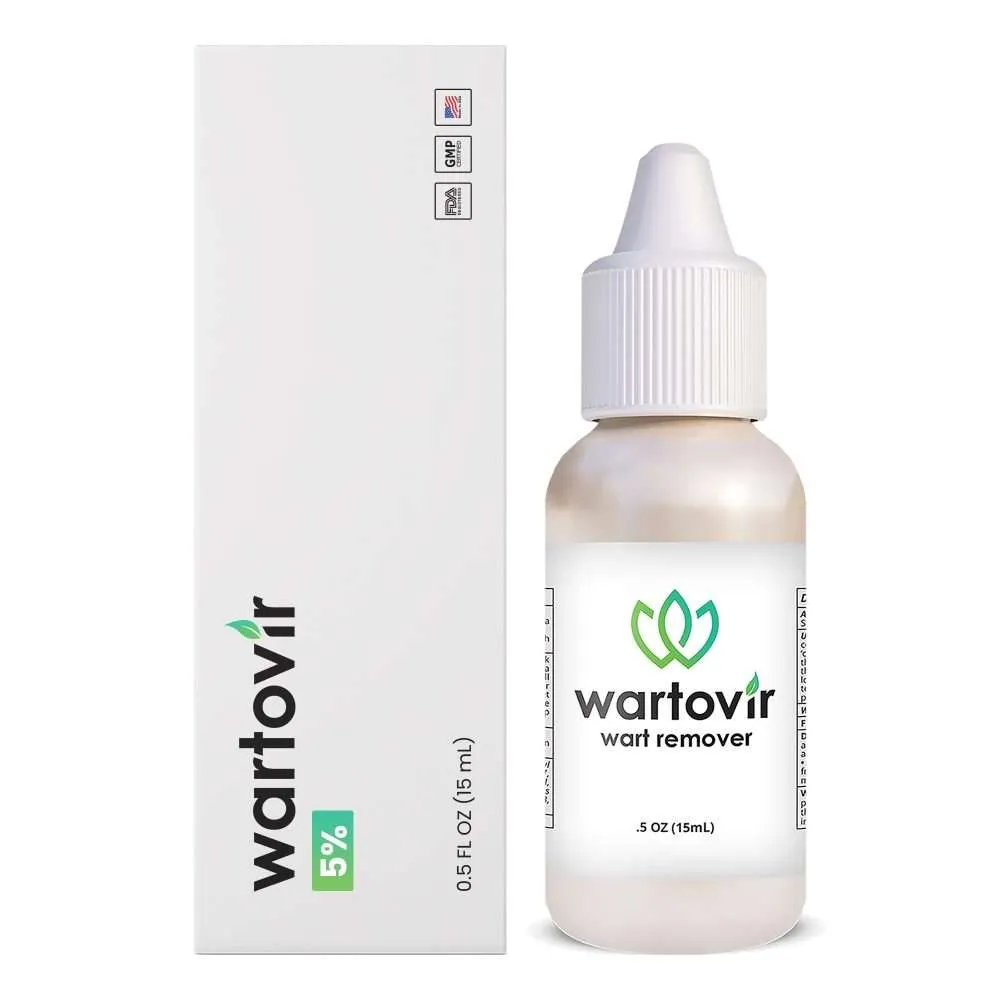
Wartovir
A topical treatment you apply at home — no doctor’s visit required.
$99.95
What are genital warts?
Genital warts are small, flesh-colored or grayish growths that appear on and around the genital and anal area. They’re caused by certain strains of HPV — mainly types 6 and 11, which together are responsible for roughly 90% of cases — and are one of the most common sexually transmitted infections. Genital warts are highly contagious through skin-to-skin contact, but they’re also very manageable once you know your options, and having them doesn’t mean you have one of the HPV strains linked to cancer.
Genital warts are often treatable at home. See how Wartovir works →
What causes genital warts?
Genital warts are caused by human papillomavirus (HPV), a virus spread through direct skin-to-skin contact during vaginal, anal, or oral sex. Condoms lower the risk of transmission but don’t eliminate it entirely, since HPV can live on areas of skin a condom doesn’t cover. The virus can also be passed by a partner who has no visible warts, which is part of why it’s so common — most sexually active people are exposed to some strain of HPV at some point.
- Spreads through direct skin-to-skin contact, not just penetrative sex
- Can be transmitted even when the infected partner shows no visible warts
- Warts typically appear 1 to 8 months after exposure, sometimes longer
- Risk increases with more sexual partners, inconsistent condom use, smoking, or a weakened immune system
Because of that incubation window, it’s often impossible to know exactly when or from whom the virus was contracted — a new diagnosis doesn’t necessarily point to a recent partner.
Symptoms to look out for
- Small, flesh-colored bumps, alone or in cauliflower-like clusters
- Itching, irritation, or mild bleeding around the affected area
- Warts on the vulva, penis, scrotum, or around the anus
- Increased moisture or discomfort in the genital area
Warts can take weeks or months to appear after exposure, which makes them easy to miss at first. Left untreated, they may stay the same, grow in size or number, or occasionally resolve on their own — there’s no way to predict which. If you notice new bumps or persistent itching, it’s worth confirming what you’re dealing with.
How are genital warts diagnosed?
Most of the time, a healthcare provider can diagnose genital warts through a visual exam alone — no lab test is required for a typical case. If a growth looks unusual, doesn’t respond to treatment, or the diagnosis is unclear, a provider may take a small tissue sample (biopsy) to rule out other conditions. There’s no blood test for genital warts specifically, since diagnosis is based on the visible warts themselves rather than a lab-detectable marker.
A proper diagnosis matters most the first time you notice a new growth, since a few other conditions — skin tags, molluscum contagiosum, and other benign bumps — can look similar.
Go deeper on genital wart treatment
Is at-home treatment right for you?
Often a reasonable start
- Warts are visible
- Want to avoid an in-person exam first
- Looking for a lower-cost, no-prescription option
See a provider instead
- Warts are on mucosal tissue
- Warts are painful or bleeding
- You’re pregnant or immunocompromised
Can genital warts be prevented?
There’s no way to fully eliminate the risk of HPV once you’re sexually active, but a few steps meaningfully lower your chances of getting or spreading genital warts:
- Getting the HPV vaccine — recommended for adolescents and approved for adults up to age 45
- Using condoms or dental dams consistently, though they don’t cover all exposed skin
- Limiting your number of sexual partners or being in a mutually monogamous relationship
- Talking with partners about symptoms before having sex, and pausing sex while warts are visible
Having genital warts once doesn’t grant future immunity — the virus can persist in the body, and warts can recur even after successful treatment.
What customers are saying
“Discreet shipping made this so much less stressful. Started seeing changes in first week.”
Verified buyer
“Easy to fit into a normal routine. No appointment, no fuss.”
Verified buyer
“Wish I’d tried this before booking a doctor’s visit. Straightforward to use.”
Verified buyer
Frequently asked questions
Do genital warts go away on their own?
Sometimes, but treatment removes visible warts faster and reduces the chance of spreading them to a partner.
Are genital warts the same thing as HPV?
Not quite — genital warts are one possible result of an HPV infection. HPV itself refers to the virus, which has over 100 strains; only a couple of them (mainly types 6 and 11) cause visible warts. You can carry HPV without ever developing warts.
Can genital warts turn into cancer?
No. The HPV strains that cause genital warts (types 6 and 11) are different from the high-risk strains (like types 16 and 18) linked to cervical and other cancers. Having genital warts doesn’t mean you have a cancer-causing strain.
Can genital warts come back after treatment?
Yes, they can recur even after successful treatment, since treatment removes the visible warts but doesn’t necessarily clear the underlying virus from the body.
I haven’t been sexually active recently — why do I have genital warts now?
HPV can stay dormant in the body for months or even years before warts appear, so a new diagnosis doesn’t necessarily mean a recent exposure.
Should I tell my partner?
Yes — genital warts and the HPV that causes them are contagious, including when warts aren’t visible. Being upfront lets your partner make informed decisions about testing, vaccination, and protection.
How long does Wartovir take to work?
Most customers see visible change within a few days with total treatment time being 1-3 weeks.
Is it discreet?
Yes — orders ship in plain packaging with no product branding, and billing descriptors don’t reference the product.
Start treating your warts today
Join 62,000+ customers who treated their warts privately at home.