
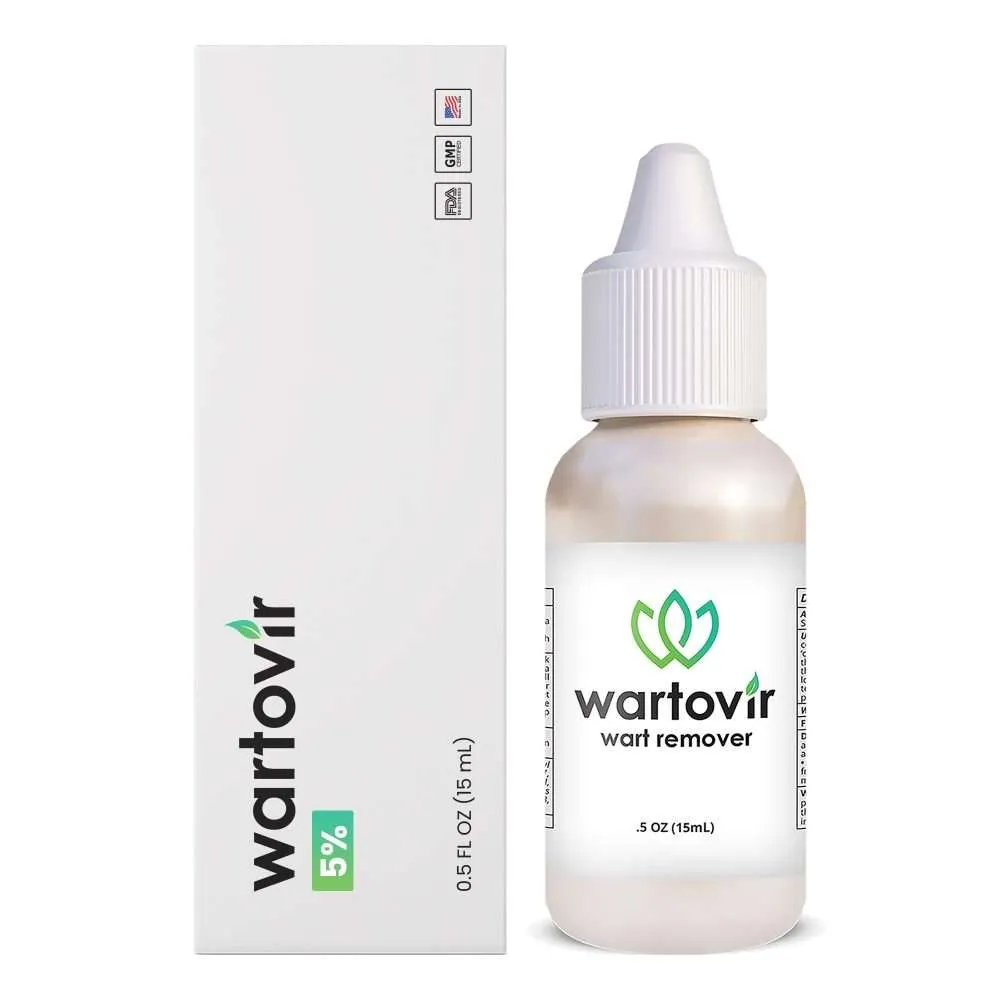
Wartovir
A topical treatment you apply at home — no doctor’s visit required.
$99.95
What are periungual warts?
Periungual warts form around the edges of the fingernails or toenails, and sometimes under the cuticle. They’re caused by certain strains of HPV and are more common in people who bite their nails or pick at their cuticles, since that gives the virus an easy way in. Because of where they grow, they can be more stubborn to clear than warts elsewhere on the body.
Warts around the nail and cuticle often respond to consistent at-home treatment. See how Wartovir works →
What causes periungual warts?
Periungual warts are caused by human papillomavirus (HPV) entering the skin around the nail through small breaks — most often from nail biting, cuticle picking, or aggressive manicures. The skin around the nail is already prone to small tears, which makes this area an easier entry point for the virus than smoother skin elsewhere.
- Nail biting and cuticle picking are the most common entry points
- Can also enter through small nicks from nail clippers, cuticle trimming, or artificial nail application
- Spreads through direct contact or shared items like nail clippers and files
- Can spread to nearby fingers through continued nail biting or picking at the wart itself
Breaking the underlying habit — nail biting in particular — matters as much as treating the wart itself, since it’s often what let the virus in to begin with.
Symptoms to look out for
- Small, rough bumps around the nail fold or cuticle, often cauliflower-like as they grow
- Skin that tears, cracks, or bleeds slightly around the nail
- Changes to how the nail grows, or the cuticle pulling away
These warts often start as a small, hard bump you might mistake for a hangnail or dry skin. If a bump near your nail isn’t going away, or you notice the nail itself starting to lift or change shape, it’s worth confirming what you’re dealing with.
How are periungual warts diagnosed?
A provider can usually diagnose a periungual wart by sight — the rough, irregular texture around the nail fold is fairly distinctive. No lab test is typically needed. Because the nail itself can make a wart harder to fully see, a provider may check whether the growth extends under the nail plate, which changes the recommended approach.
If the diagnosis is unclear or the nail shows unusual changes, a small biopsy can rule out other conditions.
How treatment works
From first application to clear skin
Wartovir’s topical formula works with your body — no needles, no numbing cream, no waiting room. Apply carefully around the nail, avoiding the nail plate itself.
Ships in discreet packaging
Is at-home treatment right for you?
Often a reasonable start
- The wart is around the nail fold or cuticle, not under the nail
- Want to avoid an in-person exam first
- Willing to stick with daily treatment, since this area is often slower to clear
See a provider instead
- The wart extends under the nail or is lifting the nail plate
- There’s pus, discharge, or signs of infection
- You have diabetes or are immunocompromised
Can periungual warts be prevented?
You can’t eliminate the risk entirely, but a few habits meaningfully lower your chances of getting or spreading periungual warts:
- Break the habit of nail biting or cuticle picking, which is the single biggest risk factor for this wart type
- Don’t share nail clippers, files, or other manicure tools with someone who has visible warts
- Ask your nail salon about their tool sanitizing practices, or bring your own tools
- Keep the skin around your nails moisturized to reduce small cracks that give the virus an entry point
Having a periungual wart once doesn’t grant future immunity — they can recur or spread to nearby fingers, especially if nail biting or cuticle picking continues.
Frequently asked questions
Why are periungual warts harder to treat than other warts?
The shape of the nail and cuticle makes it harder for topical treatments to reach the wart evenly, so they often take longer and need more consistency than warts on flatter skin.
How long does Wartovir take to work?
It varies by case, but expect longer than the 1-3 week timeline typical for warts elsewhere — daily consistency matters more than speed here.
Can I use Wartovir if the wart is under my nail?
No — if a wart has grown under the nail plate or is lifting the nail, see a provider. Treating that area at home risks damaging the nail bed.
Does nail biting cause periungual warts, or just make them worse?
Both. Nail biting creates the small breaks in skin that let HPV in initially, and continuing to bite once a wart is present makes it easier to spread to other fingers or reinfect the same area after treatment.
Is it discreet?
Yes — orders ship in plain packaging with no product branding, and billing descriptors don’t reference the product.
Start treating your warts today
Join 62,000+ customers who treated their warts privately at home.