
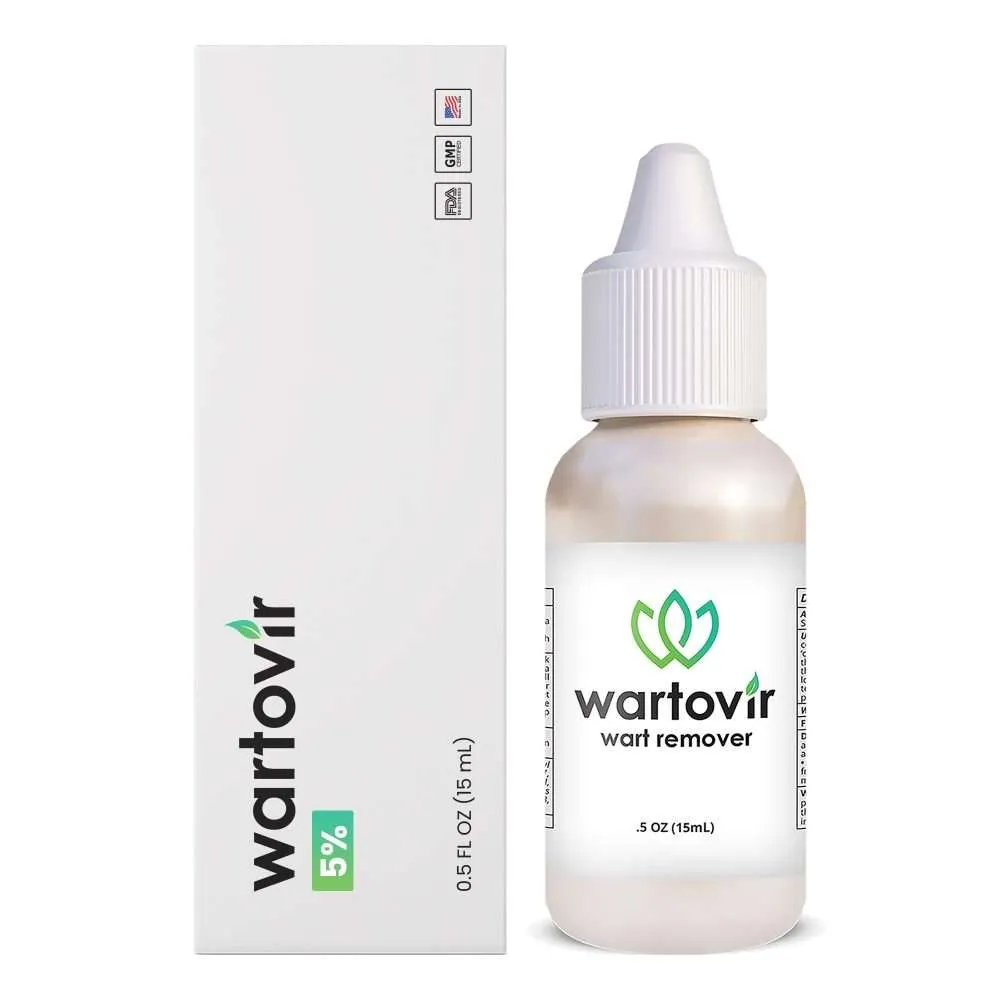
Wartovir
A topical treatment you apply at home — no doctor’s visit required.
$99.95
What are mosaic warts?
Mosaic warts are clusters of plantar warts that grow tightly together, usually on the sole of the foot, forming a patch that can resemble tile work — hence the name. They’re caused by the same HPV strains as regular plantar warts, but because they cover more surface area, they tend to take longer to clear and can be more stubborn to treat.
Smaller mosaic clusters often respond to consistent at-home treatment. See how Wartovir works →
What causes mosaic warts?
Mosaic warts start the same way any plantar wart does — HPV entering the sole of the foot through a small cut or crack in the skin. What makes them “mosaic” is that instead of one wart forming, several individual warts grow close together and eventually merge into a single patch. This tends to happen when a first wart goes untreated long enough to spread locally, or when the immune system doesn’t fully contain the initial infection.
- Begins as an ordinary plantar wart that spreads locally into a cluster
- Spreads easily on damp, shared surfaces like pool decks, locker rooms, and public showers
- More likely to develop when an initial wart is left untreated for an extended period
- Can affect people with weakened immune systems more severely, since the virus has an easier time spreading
Not every plantar wart turns into a mosaic pattern — most stay single, but catching and treating a new wart early is the best way to keep it that way.
Symptoms to look out for
- A cluster of small, rough bumps growing close together in a patch
- Tiny black dots scattered through the patch (clotted blood vessels)
- Pain or tenderness when walking or standing, often more noticeable than with a single wart
Mosaic warts can look like a callus or patch of thickened skin at first. If you notice a growing patch on the sole of your foot with the telltale black dots, it’s worth confirming what you’re dealing with.
How are mosaic warts diagnosed?
A provider can usually diagnose a mosaic wart by sight, based on the clustered pattern and characteristic black dots throughout the patch. No lab test is typically needed. Because mosaic warts are sometimes mistaken for a callus or a fungal skin condition, a proper diagnosis is especially useful before starting any treatment, since the right approach depends on what’s actually there.
If the diagnosis is unclear or the patch doesn’t respond as expected, a small biopsy can rule out other skin conditions.
How treatment works
From first application to clear skin
Wartovir’s topical formula works with your body — no needles, no numbing cream, no waiting room. Because mosaic warts cover more area, treatment often takes longer and more consistency than a single wart.
Ships in discreet packaging
Is at-home treatment right for you?
Often a reasonable start
- A smaller, contained patch of warts
- Want to avoid an in-person exam first
- Willing to stick with daily treatment for several weeks
See a provider instead
- The patch covers a large area of the foot
- Warts are severely painful or interfering with walking
- You have diabetes, poor circulation, or are immunocompromised
Can mosaic warts be prevented?
You can’t eliminate the risk entirely, but a few habits meaningfully lower your chances of a mosaic pattern forming or spreading:
- Treat a plantar wart as soon as you notice it, rather than waiting — early treatment is what most often keeps it from spreading into a cluster
- Wear sandals or shower shoes in locker rooms, public showers, and around pools
- Keep feet clean and dry, and change socks regularly
- Avoid sharing shoes, socks, or towels with someone who has a visible wart
Having a mosaic wart once doesn’t grant future immunity — new warts can form, especially with continued barefoot exposure in communal wet areas.
What customers are saying
“Had a cluster of warts spread across my heel. Took a few weeks of sticking with it, but it worked.”
Verified buyer
“Easy to fit into a normal routine. No appointment, no fuss.”
Verified buyer
“Nothing else had worked before. Slow going but steady progress.”
Verified buyer
Frequently asked questions
Are mosaic warts harder to treat than regular plantar warts?
Yes — because they cover a larger area, mosaic warts generally take longer and require more consistent treatment than a single wart.
How long does Wartovir take to work on mosaic warts?
It varies with the size of the patch, but expect longer than the 1-3 week timeline typical for a single wart — consistency matters more than speed here.
Why did my single plantar wart turn into a mosaic patch?
This usually happens when an initial wart goes untreated for a while, giving it time to spread locally into nearby skin. It’s not something you did wrong — but it’s a good reason to treat new plantar warts early rather than waiting.
Are mosaic warts contagious?
Yes — like other plantar warts, they spread through direct contact with the virus, often via damp shared surfaces like pool decks and locker rooms.
Is it discreet?
Yes — orders ship in plain packaging with no product branding, and billing descriptors don’t reference the product.
Start treating your warts today
Join 62,000+ customers who treated their warts privately at home.